Lately we often hear the word said the Internet where people where people are always talking about Internet Friends give each other their e mail address yet again if one is asking you about our homepage. Internet seems to have is common in the community We all know. What is the Internet Another term for the Internet is the Cyberspace (virtual world), the virtual world, homepage or
Showing posts with label Artikel IT. Show all posts
Tuesday
Sunday
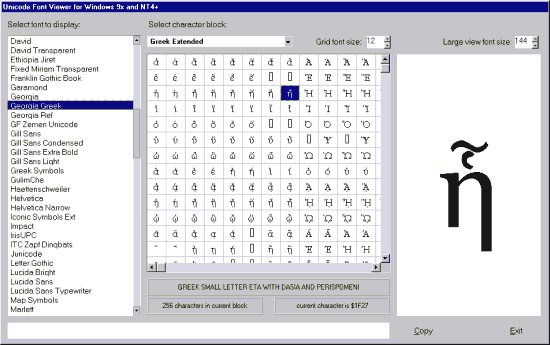
Unicode Support Local Antivirus
Local antivirus it is now very much. But not many local antivirus developed seriously to eradicate the local virus that also will not cease to innovate to attack computers. For proof, just a few local antivirus that supports unicode.
Unicode is an industry standard designed to allow text and symbols from
10 most popular free antivirus 2010
A good anti-virus computer software does not have to be paid, there are many good free version. In fact, some anti-virus free magazines often considered as even more powerful computers.
Below are the 10 anti-virus which can be downloaded free of charge. Please click
Performance Of the Popular Free Anti-Virus
People of the world leaders Hacker
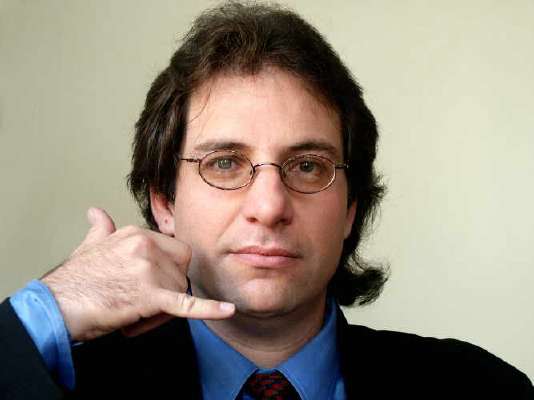
Kevin Mitnick
Perhaps the most famous hakcer Mitnick became of his generation, because Mitnick has been 'crowned' by the U.S. Justice Department became the most wanted computer criminal in the United States along seharag. Mitnick with his posture that matches the character of a hacker, enter t
Indonesian Hacker figures
1. Dani
Firmansyah A.K.A Xnuxer
Firmansyah A.K.A Xnuxer Xnuxer (in cyberspace), Dani Firmansyah nickname in the underworld, the Cyber Crime Unit arrested the Directorate of Special Investigation Metro Jaya Regional Police on 24 April 2004 at about 17:20 pm in Jakarta.Friday, April 16, Xnuxer tried to test security systems kpu.go.id via XSS (cross site scripting) from IP 202.158.10.117, but screen out low-level risk "message (KPU website has not been transparent or
Meaning of the term HTTP
HTTP stands for Hypertext Transfer Protocol, which is a protocol that is used by the World Wide Web. HTTP defines how a message can be formatted and sent from server to client. HTTP also regulates the actions of what should be done by the web server and web browser in response to the
Monday
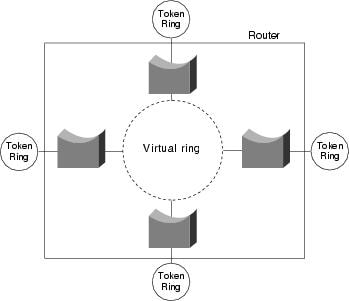
CONCEPT ROUTER
Why is it necessary routerBefore we learn more about how to configure router cisco, we need to understand better about some basic rulesrouting. Also of course we must understand the numbering system IP, subnetting, netmasking and his brothers.
Case in point:
INCREASING TIPS, PERFORMANCE WINDOWS (COMPUTER) Part II
-> TOP TIPS! Accelerate Computer Work
13. Actually it only takes no more than two minutes just to get into Windows since computer is turned on. However, sometimes feels very long. To speed up the loading of Windows, there are some things can be done. For example, reducing the icon on the desktop and not using wallpaper that takes up less memory. Replace wallpaper with a background color, and use Desktop Cleanup Wizard that there can be found by right clicking on the desktop to clean icon. Do not forget also, run a defrag on a regular basis. If you frequently add or reduce the programs on your computer, clean your registry regularly. Use aids such as Registry Mechanic software from www.winguides.com site. Unfortunately, the trial version This program can only be used to improve just as much as six sections. Another step that needs to be done is to remove
Thursday
INCREASING TIPS, PERFORMANCE WINDOWS (COMPUTER)
Part I
After installing Windows and other applications required into the computer, there some things you should do. Among them are doing some things for accelerate and simplify the performance of the computer. For example, arrange for your computer to be restarted more fast, or bring the hidden menu, use the shortcut for faster access and other forth.
Sejarah Pembuatan Processor
Pasir, seperempat bagiannya terbentuk dari silikon, yakni unsur kimia yang paling berlimpah di muka bumi ini setelah oksigen. Pasir (terutama quartz), mempunyai persentase silikon yang tinggi di dalam bentuk Silicon Dioxide (SiO2) dan pasir merupakan bahan pokok untuk memproduksi semiconductor.
Monday
OpenBSD
OpenBSD
From Wikipedia, the free encyclopedia
Jump to: navigation, search
"Free, Functional & Secure" | |
The OpenBSD Project | |
OS family | |
Working state | Current |
Source model | |
Package manager | OpenBSD package tools and ports tree |
Supported platforms | |
Kernel type | |
BSD | |
Default user interface | |
Mostly BSD | |
OpenBSD is a Unix-like computer operating system descended from Berkeley Software Distribution (BSD), a Unix derivative developed at the University of California, Berkeley. It was forked from NetBSD by project leader Theo de Raadt in late 1995. The project is widely known for the developers' insistence on open source code and
Rahasia Posting Efektif untuk Mendongkrak Pengunjung
Banyak cara untuk mendongkrak jumlah pengunjung dan meningkatkan rangking blog anda. Salah satunya dengan memposting artikel.
Tapi tahukah anda bagaimana cara posting yang efektif? Bagaimana caranya agar posting anda bisa memikat pengunjung untuk terus menerus datang ke blog anda?
Selama ngeblog, saya amati ada beberapa hal yang membuat posting bisa menjadi senjata ampuh mendatangkan pengunjung. Di bawah ini ada beberapa hal dasar yang perlu diperhatikan ketika memposting.
1. Memposting secara rutin.
Memposting artikel secara rutin sangat berpengaruh terhadap
Thursday
BIOS
- Inisialisasi (penyalaan) serta pengujian terhadap perangkat keras (dalam proses yang disebut dengan Power On Self Test, POST)
- Memuat dan menjalankan sistem operasi
- Mengatur beberapa konfigurasi dasar dalam komputer (tanggal, waktu, konfigurasi media penyimpanan, konfigurasi proses booting, kinerja, serta kestabilan komputer)
- Membantu sistem operasi dan aplikasi dalam proses pengaturan perangkat keras dengan menggunakan BIOS Runtime Services.
BIOS menyediakan antarmuka komunikasi tingkat rendah, dan dapat mengendalikan banyak jenis perangkat keras (seperti keyboard). Karena kedekatannya dengan perangkat keras, BIOS umumnya dibuat dengan menggunakan bahasa rakitan (assembly) yang digunakan oleh mesin yang bersangkutan.
Istilah BIOS pertama kali muncul dalam sistem operasi CP/M, yang merupakan bagian dari CP/M yang dimuat pada saat proses booting dimulai yang berhadapan secara langsung dengan perangkat keras (beberapa mesin yang menjalankan CP/M memiliki boot loader sederhana dalam ROM). Kebanyakan versi DOS memiliki sebuah berkas yang disebut "IBMBIO.COM" (IBM PC-DOS) atau "IO.SYS" (MS-DOS) yang berfungsi sama seperti halnya CP/M disk BIOS.
Kata BIOS juga dapat diartikan sebagai "kehidupan" dalam tulisan Yunani (Βίος).
Komponen BIOS
Dalam BIOS, terdapat beberapa komponen dasar, yakni sebagai berikut:
- Program BIOS Setup yang memungkinkan pengguna untuk mengubah konfigurasi komputer (tipe harddisk, disk drive, manajemen daya listrik, kinerja komputer, dll) sesuai keinginan. BIOS menyembunyikan detail-detail cara pengaksesan perangkat keras yang cukup rumit apabila dilakukan secara langsung.
- Driver untuk perangkat-perangkat keras dasar, seperti video adapter, perangkat input, prosesor, dan beberapa perangkat lainnya untuk sistem operasi dasar 16-bit (dalam hal ini adalah keluarga DOS).
- Program bootstraper utama yang memungkinkan komputer dapat melakukan proses booting ke dalam sistem operasi yang terpasang.
ROM dan NVRAM
BIOS juga sering disebut sebagai ROM BIOS karena pada awalnya BIOS disimpan dalam chip memori hanya baca (ROM) dalam motherboard. Mengapa disimpan di dalam ROM, adalah agar BIOS dapat dieksekusi pada waktu komputer dinyalakan, tanpa harus menunggu untuk menyalakan perangkat media penyipanan terlebih dahulu (yang memakan waktu lama). BIOS dalam komputer PC modern disimpan dalam chip ROM yang dapat ditulisi ulang secara elektrik atau Flash ROM. Karena itulah, sekarang sebutan Flash BIOS lebih populer dibandingkan dengan ROM BIOS. Berikut ini adalah beberapa chip ROM yang digunakan sebagai tempat penyimpanan BIOS.
Tipe ROM | Cara penulisan | Dapat dihapus | Jenis BIOS |
|---|---|---|---|
Tidak | ROM BIOS | ||
PROM Writer | Tidak | ROM BIOS | |
EPROM/PROM Writer | Ya, dengan menggunakan EPROM Rewriter atau menyinarinya dengan sinar ultraviolet tepat pada lubang kuarsa bening. | ROM BIOS | |
EEPROM/EPROM/PROM Writer | Ya, dengan menggunakan EEPROM Rewriter, atau secara langsung secara elektrik dari papan sirkuit dengan menggunakan perangkat lunak EEPROM Programmer. | ROM BIOS | |
EEPROM Writer atau software yang dapat menulisi Flash ROM | Ya, dengan menggunakan EEPROM Writer, atau langsung secara elektrik dari papan sirkuit dengan menggunakan perangkat lunak Flash BIOS Programmer. | Flash BIOS |
Meskipun BIOS disimpan dalam memori hanya baca, konfigurasi BIOS tidak disimpan dalam ROM, (hal ini 
disebabkan oleh sifat ROM yang statis) melainkan sebuah chip terpisah yang disebut sebagai Real-time clock (RTC), yang berupa sebuah Non-Volatile Random Access Memory (NVRAM). NVRAM juga sering disebut sebagai Complimentary Metal-Oxide Random Access Memory (CMOS RAM), karena menggunakan metode pembuatan CMOS. Karena menggunakan metode pembuatan CMOS, NVRAM membutuhkan daya yang sangat kecil agar dapat bekerja. Meskipun disebut non-volatile, NVRAM sebenarnya merupakan sebuah chip yang volatile, sehingga data yang tersimpan di dalamnya dapat terhapus dengan mudah jika daya listrik yang menghidupinya terputus. Oleh karena itu, NVRAM "dihidupi" oleh sebuah baterai (mirip baterai kalkulator atau jam) dengan bahan Litium dengan seri CR-2032. Sebuah baterai Litium CR-2032 dapat menghidupi NVRAM selama tiga hingga lima tahun. Jika daya dalam baterai habis, atau daya yang disuplainya terputus (akibat dicabut dari slotnya), maka semua konfigurasi akan dikembalikan ke kondisi standar, sesuai ketika BIOS tersebut diprogram oleh pabrikan. BIOS umumnya memberikan laporan CMOS Checksum Error atau NVRAM Checksum Error.
Pembuat BIOS
Saat ini, ada beberapa perusahaan penyedia BIOS, yakni sebagai berikut:
- Award Software, yang meluncurkan Award BIOS, Award Modular BIOS, dan Award Medallion BIOS
- Phoenix Technologies, yang meluncurkan Phoenix BIOS, dan setelah melakukan merjer dengan Award Software, meluncurkan Phoenix-Award BIOS.
- American Megatrends Incorporated (AMI) yang merilis AMI BIOS, dan AMI WinBIOS.
- Microids Research
- Para OEM (Original Equipment Manufacturer), seperti Hewlett-Packard/Compaq, IBM/Lenovo, Dell Computer, dan OEM-OEM lainnya.
Update BIOS
BIOS kadang-kadang juga disebut sebagai firmware karena merupakan sebuah perangkat lunak yang disimpan dalam media penyimpanan yang bersifat hanya-baca. Hal ini benar adanya, karena memang sebelum tahun 1995, BIOS selalu disimpan dalam media penyimpanan yang tidak dapat diubah. Seiring dengan semakin kompleksnya sebuah sistem komputer , maka BIOS pun kemudian disimpan dalam EEPROM atau Flash memory yang dapat diubah oleh pengguna, sehingga dapat di-upgrade (untuk mendukung prosesor yang baru muncul, adanya bug yang mengganggu kinerja atau alasan lainnya). Meskipun demikian, proses update BIOS yang tidak benar (akibat dieksekusi secara tidak benar atau ada hal yang mengganggu saat proses upgrade dilaksanakan) dapat mengakibatkan motherboard mati mendadak, sehingga komputer pun tidak dapat digunakan karena perangkat yang mampu melakukan proses booting (BIOS) sudah tidak ada atau mengalami kerusakan.
Oleh karena itu, untuk menghindari kerusakan (korupsi) terhadap BIOS, beberapa motherboard memiliki BIOS cadangan . Selain itu, kebanyakan BIOS juga memiliki sebuah region dalam EEPROM/Flash memory yang tidak dapat di-upgrade, yang disebut sebagai "Boot Block". Boot block selalu dieksekusi pertama kali pada saat komputer dinyalakan. Kode ini dapat melakukan verifikasi terhadap BIOS, bahwa kode BIOS keseluruhan masih berada dalam keadaan baik-baik saja (dengan menggunakan metode pengecekan kesalahan seperti checksum, CRC, hash dan lainnya) sebelum mengeksekusi BIOS. Jika boot block mendeteksi bahwa BIOS ternyata rusak, maka boot block akan meminta pengguna untuk melakukan pemrograman BIOS kembali dengan menggunakan floppy disk yang berisi program flash memory programmer dan image BIOS yang sama atau lebih baik. Pembuat motherboard sering merilis update BIOS untuk menambah kemampuan produk mereka atau menghilangkan beberapa bug yang mengganggu.
Masa depan BIOS
BIOS telah lama digunakan dalam industri PC, yakni semenjak IBM PC dirilis pada tanggal 21 Agustus 1981. Karena BIOS masih berjalan pada modus real (real-mode) yang lambat, maka para desainer PC bersepakat untuk mengganti BIOS dengan yang lebih baik dari BIOS yaitu EFI (Extensible Firmware Interface) yang diturunkan dari arsitektur IA-64 (Itanium).
sumber: http://id.wikipedia.org/wiki/BIOS
HACK
OpenBSD
From Wikipedia, the free encyclopedia
Jump to: navigation, search
"Free, Functional & Secure" | |
The OpenBSD Project | |
OS family | |
Working state | Current |
Source model | |
Package manager | OpenBSD package tools and ports tree |
Supported platforms | |
Kernel type | |
BSD | |
Default user interface | |
Mostly BSD | |
OpenBSD is a Unix-like computer operating system descended from Berkeley Software Distribution (BSD), a Unix derivative developed at the University of California, Berkeley. It was forked from NetBSD by project leader Theo de Raadt in late 1995. The project is widely known for the developers' insistence on open source code and quality documentation, uncompromising position on software licensing, and focus on security and code correctness. The project is coordinated from de Raadt's home in Calgary, Alberta, Canada. Its logo and mascot is a pufferfish named Puffy.
OpenBSD includes a number of security features absent or optional in other operating systems and has a tradition of developers auditing the source code for software bugs and security problems. The project maintains strict policies on licensing and prefers the open source BSD licence and its variants—in the past this has led to a comprehensive licence audit and moves to remove or replace code under licences found less acceptable.
History and popularity
See also: Timeline of OpenBSD
In December 1994, NetBSD co-founder Theo de Raadt was asked to resign his position as a senior developer and member of the NetBSD core team, and his access to the source code repository was revoked.
The reason for this is not wholly clear, although there are claims that it was due to personality clashes within the NetBSD project and on its mailing lists.[2] De Raadt has been criticized for having a sometimes abrasive personality: in his book, Free For All, Peter Wayner claims that de Raadt "began to rub some people the wrong way" before the split from NetBSD;[3] Linus Torvalds has described him as "difficult;"[4] and an interviewer admits to being "apprehensive" before meeting him.[5] Many have different feelings: the same interviewer describes de Raadt's "transformation" on founding OpenBSD and his "desire to take care of his team," some find his straightforwardness refreshing, and few deny he is a talented coder[6] and security "guru".[7]
Bar chart showing the proportion of users of each BSD variant from a 2005 BSD usage survey.[8] Each participant was permitted to indicate multiple BSD variants
In October 1995, de Raadt founded OpenBSD, a new project forked from NetBSD 1.0. The initial release, OpenBSD 1.2, was made in July 1996, followed in October of the same year by OpenBSD 2.0.[9] Since then, the project has followed a schedule of a release every six months, each of which is maintained and supported for one year. The latest release, OpenBSD 4.5, appeared on May 1, 2009.[10]
On 25 July 2007, OpenBSD developer Bob Beck announced the formation of the OpenBSD Foundation,[11] a Canadian not-for-profit corporation formed to "act as a single point of contact for persons and organizations requiring a legal entity to deal with when they wish to support OpenBSD."[12]
Just how widely OpenBSD is used is hard to ascertain: the developers do not collect and publish usage statistics and there are few other sources of information. In September 2005 the nascent BSD Certification Group performed a usage survey which revealed that 32.8% of BSD users (1420 of 4330 respondents) were using OpenBSD,[8] placing it second of the four major BSD variants, behind FreeBSD with 77% and ahead of NetBSD with 16.3%.[13] The DistroWatch website, well-known in the Linux community and often used as a reference for popularity, publishes page hits for each of the Linux distributions and other operating systems it covers. As of 23 August 2008 it places OpenBSD in 54th place, with 126 hits per day. FreeBSD is in 16th place with 473 hits per day and a number of Linux and non-Linux distributions range between them.
Open source and open documentation
When OpenBSD was created, Theo de Raadt decided that the source should be available for anyone to read at any time, so, with the assistance of Chuck Cranor,[14] he set up a public, anonymous CVS server. This was the first of its kind in the software development world: at the time, the tradition was for only a small team of developers to have access to a project's source repository. This practice had downsides, notably that outside contributors had no way to closely follow a project's development and contributed work would often duplicate already completed efforts. This decision led to the name OpenBSD and signaled the project's insistence on open and public access to both source code and documentation.
A revealing incident regarding open documentation occurred in March 2005, when de Raadt posted a message[15] to the openbsd-misc mailing list. He announced that after four months of discussion, Adaptec had not disclosed the documentation required to improve the OpenBSD drivers for its AAC RAID controllers. As in similar circumstances in the past, he encouraged the OpenBSD community to become involved and express their opinion to Adaptec. Shortly after this, FreeBSD committer, former Adaptec employee and author of the FreeBSD AAC RAID support Scott Long[16] castigated de Raadt[17] on the OSNews website for not contacting him directly regarding the issues with Adaptec. This caused the discussion to spill over onto the freebsd-questions mailing list, where the OpenBSD project leader countered[18] by claiming that he had received no previous offer of help from Scott Long nor been referred to him by Adaptec. The debate was amplified[19] by disagreements between members of the two camps regarding the use of binary blob drivers and non-disclosure agreements (NDAs): OpenBSD developers do not permit the inclusion of closed source binary drivers in the source tree and are reluctant to sign NDAs. However, the FreeBSD project has a different policy and much of the Adaptec RAID management code Scott Long proposed as assistance for OpenBSD was closed source or written under an NDA. As no documentation was forthcoming before the deadline for release of OpenBSD 3.7, support for Adaptec AAC RAID controllers was removed from the standard OpenBSD kernel.
The OpenBSD policy on openness extends to hardware documentation: in the slides for a December 2006 presentation, de Raadt explained that without it "developers often make mistakes writing drivers," and pointed out that "the [oh my god, I got it to work] rush is harder to achieve, and some developers just give up."[20] He went on to say that vendor binary drivers are considered unacceptable to OpenBSD—in their view they cannot be trusted and there is "no way to fix [them] ... when they break." Vendor source is "marginally acceptable" and still difficult to fix when problems occur.
Licensing
OpenBSD 3.7 running X.Org with the JWM window manager
A goal of the OpenBSD project is to "maintain the spirit of the original Berkeley Unix copyrights," which permitted a "relatively un-encumbered Unix source distribution."[21] To this end, the Internet Systems Consortium (ISC) licence, a simplified version of the BSD licence with wording removed that is unnecessary under the Berne convention, is preferred for new code, but the MIT or BSD licences are accepted. The widely used GNU General Public License is considered overly restrictive in comparison with these.[22] Code that is under any license considered undesirable is no longer accepted for addition to the base system. Existing code under such licences is actively replaced or relicensed when possible, except in cases where there is no suitable replacement and creating one would be time-consuming and impractical. Of particular note is the development of OpenSSH, based on the original SSH suite and developed further by the OpenBSD team. It first appeared in OpenBSD 2.6 and is now the single most popular SSH implementation, available as standard or as a package on many operating systems. Also worth mentioning is the development, after licence restrictions were imposed on IPFilter, of the pf packet filter, which first appeared[23] in OpenBSD 3.0 and is now available in DragonFly BSD, NetBSD and FreeBSD. More recently, OpenBSD releases have seen the GPL licensed tools bc, dc, diff, grep, gzip, nm, pkg-config, RCS, sendbug (part of GNATS) and size replaced with BSD licensed equivalents. OpenBSD developers are also behind OpenBGPD, OpenOSPFD, OpenNTPD and OpenCVS, which are other BSD licensed alternatives to existing software. In September 2007, the OpenBSD team took the initial steps towards replacing the GNU Compiler Collection (GCC) by importing Anders Magnusson's BSD-licensed Portable C Compiler (PCC) into CVS.[24]
In June 2001, triggered by concerns over Darren Reed's modification of IPFilter's licence wording, a systematic licence audit of the OpenBSD ports and source trees was undertaken.[25] Code in more than a hundred files throughout the system was found to be unlicensed, ambiguously licensed or in use against the terms of the licence. To ensure that all licences were properly adhered to, an attempt was made to contact all the relevant copyright holders: some pieces of code were removed, many were replaced, and others, including the multicast routing tools, mrinfo and map-mbone,[26] which were licensed by Xerox for research only, were relicensed so that OpenBSD could continue to use them. Also of note during this audit was the removal of all software produced by Daniel J. Bernstein. At the time, Bernstein requested that all modified versions of his code be approved by him prior to redistribution, a requirement to which OpenBSD developers were unwilling to devote time or effort.[27] The removal led to a clash with Bernstein who felt the removal of his software to be uncalled for. He cited the Netscape web browser as much less freely licensed, accusing the OpenBSD developers of hypocrisy for permitting Netscape to remain while removing his software.[28] The OpenBSD project's stance was that Netscape, although not open source, had licence conditions that could be more easily met.[29] They asserted that Bernstein's demand for control of derivatives would lead to a great deal of additional work and that removal was the most appropriate way to comply with his requirements.
Security and code auditing
For more details on this topic, see OpenBSD security features.
Shortly after OpenBSD's creation, Theo de Raadt was contacted by a local security software company named Secure Networks, Inc. or SNI.[30][31] They were developing a "network security auditing tool" called Ballista (later renamed to Cybercop Scanner after SNI was purchased by Network Associates) which was intended to find and attempt to exploit possible software security flaws. This coincided well with de Raadt's own interest in security, so the two agreed to cooperate, a relationship that was of particular use leading up to the release of OpenBSD 2.3[32] and helped to form the focal point of the project: OpenBSD developers would attempt to do what was right, proper or secure, even at the cost of ease, speed or functionality. As bugs within OpenBSD became harder to find and exploit, the security company found that it was too difficult and expensive to handle such obscure problems. After years of cooperation, the two parties decided that their goals together had been met and they parted ways.
Until June 2002, the OpenBSD website featured the slogan:
“ | Five years without a remote hole in the default install! | ” |
In June 2002, Mark Dowd of Internet Security Systems disclosed a bug in the OpenSSH code implementing challenge-response authentication.[33] This vulnerability in the OpenBSD default installation allowed an attacker remote access to the root account, which was extremely serious not only to OpenBSD, but also to the large number of other operating systems that were using OpenSSH by that time.[34] This problem necessitated the adjustment of the slogan on the OpenBSD website to:
“ | One remote hole in the default install, in nearly 6 years! | ” |
“ | Only two remote holes in the default install, in a heck of a long time! | ” |
This statement has been criticized because little is enabled in a default install of OpenBSD and releases have included software that was later found to have remote holes. However, the project maintains that the slogan is intended to refer to a default install and that it is correct by that measure. One of the fundamental ideas behind OpenBSD is a drive for systems to be simple, clean and secure by default. For example, OpenBSD's minimal defaults fit in with the standard computer security practice of enabling as few services as possible on production machines. The project also uses open source and code auditing practices argued to be important elements of a security system.[37]
OpenBSD includes a large number of features specifically designed to improve security. These include: API and toolchain alterations, such as the arc4random, issetugid, strlcat, strlcpy and strtonum functions, as well as a static bounds checker; memory protection techniques to guard against invalid accesses, such as ProPolice, StackGhost, the W^X (W xor X) page protection features, as well as alterations to malloc; cryptography and randomization features, including network stack enhancements and the addition of the Blowfish cipher for password encryption.
To reduce the risk of a vulnerability or misconfiguration allowing privilege escalation, some programs have been written or adapted to make use of privilege separation, privilege revocation and chrooting. Privilege separation is a technique, pioneered on OpenBSD and inspired by the principle of least privilege, where a program is split into two or more parts, one of which performs privileged operations and the other—almost always the bulk of the code—runs without privilege.[38] Privilege revocation is similar and involves a program performing any necessary operations with the privileges it starts with then dropping them. Chrooting involves restricting an application to one section of the file system, prohibiting it from accessing areas that contain private or system files. Developers have applied these features to OpenBSD versions of common applications, including tcpdump and the Apache web server (the latter of which, due to licensing issues with the later Apache 2 series, is a heavily patched 1.3.29 release).
The project has a policy of continually auditing code for problems, work that developer Marc Espie has described as "never finished ... more a question of process than of a specific bug being hunted."[39] He went on to list several typical steps once a bug is found, including examining the entire source tree for the same and similar issues, "try[ing] to find out whether the documentation ought to be amended," and investigating whether "it's possible to augment the compiler to warn against this specific problem." Along with DragonFly, OpenBSD is one of the only two open source operating systems with a policy of seeking out examples of classic, K&R C code and converting it to the more modern ANSI equivalent (this involves no functional change and is purely for readability and consistency reasons). A standard code style, the Kernel Normal Form, which dictates how code must look in order to be easily maintained and understood, must be applied to all code before it is considered for inclusion in the base operating system; existing code is actively updated to meet the style requirements.
Linux kernel creator Linus Torvalds has expressed the view that development efforts should be focused on fixing general problems rather than targeting security issues, as non-security bugs are more numerous ("all the boring normal bugs are _way_ more important, just because there's a lot more of them"[40]). On July 15, 2008, he criticised the OpenBSD policy: "[T]hey make such a big deal about concentrating on security that they pretty much admit that nothing else matters to them." [41] OpenBSD developer Marc Espie replied to Torvalds' statement: "It's a totally misinformed opinion ... [Fixing normal bugs] is exactly what people in the OpenBSD project do, all the time."[42] Developer Artur Grabowski also expressed surprise: "That's the funniest part about this ... [Torvalds] was saying the same things we say."[43]
Uses
OpenBSD's security enhancements, built-in cryptography and the pf firewall suit it for use in the security industry, particularly for firewalls, intrusion-detection systems and VPN gateways. It is also commonly used for servers which must resist cracking and DoS attacks, and due to including the spamd daemon, it sometimes is used in mail filtering applications.
OpenBSD 3.8 running X.Org with the default FVWM 2.2.5 window manager
Several proprietary systems are based on OpenBSD, including Profense from Armorlogic ApS,[44] AccessEnforcer from Calyptix Security,[45] GeNUGate and GeNUBox from GeNUA mbH,[46] RTMX O/S from RTMX Inc,[47] syswall from Syscall Network Solutions AG,[48] HIOBMessenger from topX, and various security appliances made by .vantronix GmbH.[49] Of these, GeNUA, RTMX, and .vantronix have contributed back to OpenBSD: GeNUA funded the development of SMP on the i386 platform, RTMX have sent patches to add further POSIX compliance to the system, and .vantronix contributed in networking and load balancing. Several open source operating systems have also been derived from OpenBSD, notably Anonym.OS and MirOS BSD, as well as the now defunct ekkoBSD, MicroBSD and Gentoo/OpenBSD. In addition, code from many of the OpenBSD system tools has been used in recent versions of Microsoft's Services for UNIX, an extension to the Windows operating system which provides some Unix-like functionality, originally based on 4.4BSD-Lite. Core Force, a security product for Windows, is based on OpenBSD's pf firewall. There have also been projects which use OpenBSD as part of images for embedded systems, including OpenSoekris and flashdist; together with tools like nsh, these allow Cisco-like embedded devices to be created.[50]
OpenBSD 4.4 running Xfce
OpenBSD ships with the X window system. Following the XFree86 licence change, it includes a recent X.Org release; an older XFree86 3.3 release is also available for legacy video cards. With these, it is possible to use OpenBSD as a desktop or workstation, making use of a desktop environment or just a window manager to give the X desktop a wide range of appearances. The OpenBSD ports tree contains many of the most popular tools for desktop use, including desktop environments GNOME, KDE, and Xfce; web browsers Konqueror and Mozilla Firefox; and multimedia programs MPlayer, VLC media player and xine. In addition, graphical software for many uses is available from both the ports tree and by compiling POSIX compliant software. Also available are compatibility layers, which allow binary code compiled for other operating systems, including Linux, FreeBSD, SunOS and HP-UX, to be run. OpenBSD no longer lacks accelerated 3D graphics support;[51] as of March 2008, work on Direct Rendering Manager (DRM) is ongoing and some support is present in -current.[52]
OpenBSD's performance and usability is occasionally criticised. Felix von Leitner's performance and scalability tests[53] indicated that OpenBSD lagged behind other operating systems. In response, OpenBSD users and developers criticised von Leitner's objectivity and methodology, and asserted that although performance is given consideration, security and correct design are prioritised, with developer Nick Holland commenting: "It all boils down to what you consider important."[54] OpenBSD is also a relatively small project, particularly when compared with FreeBSD and Linux, and developer time is sometimes seen as better spent on security enhancements than performance optimisations. Critics of usability say that OpenBSD has a lack of user-friendly configuration tools, a bare default installation,[55] and a "spartan" and "intimidating" installer.[56] These see much the same rebuttals as performance: a preference for simplicity, reliability and security. As one reviewer puts it, "running an ultra-secure operating system can be a bit of work."[57]
Distribution and marketing
OpenBSD is available freely in various ways: the source can be retrieved by anonymous CVS or CVSup, and binary releases and development snapshots can be downloaded either by FTP or HTTP. Prepackaged CD-ROM sets can be ordered online for a small fee, complete with an assortment of stickers and a copy of the release's theme song. These, with its artwork and other bonuses, are one of the project's few sources of income, funding hardware, bandwidth and other expenses. Until OpenBSD 4.2, only a small install ISO image was available for download, to encourage sales of the full CD-ROM set. OpenBSD 4.2 provides a complete install ISO.
In common with several other operating systems, OpenBSD uses ports and packaging systems to allow for easy installation and management of programs which are not part of the base operating system. Originally based on the FreeBSD ports tree, the system is now quite distinct. Additionally, major changes have been made since the 3.6 release, including the replacement of the package tools by more capable versions, written in Perl by Marc Espie. In contrast to FreeBSD, the OpenBSD ports system is intended as a source used to create the end product, the packages: installing a port first creates a package and then installs it using the package tools. Packages are built in bulk by the OpenBSD team and provided for download with each release. OpenBSD is also unique among the BSDs in that the ports and base operating system are developed and released together for each version: this means that the ports or packages released with, for example, 3.7 are not suitable for use with 3.6 and vice versa. This is a policy which lends a great deal of stability to the development process, but means that the software in ports for the latest OpenBSD release can lag somewhat from the latest version available from the author.
Puffy, painted
Around the time of the OpenBSD 2.7 release, the original mascot, a BSD daemon with a trident and halo, was replaced by Puffy, traditionally said to be a pufferfish. In fact pufferfish do not possess spikes and images of Puffy are closer to a similar species, the porcupinefish. Puffy was selected because of the Blowfish encryption algorithm used in OpenSSH and the strongly defensive image of the porcupinefish with its spikes to deter predators. He quickly became very popular, mainly because of the appealing image of the fish and his distinction from the BSD daemon used by FreeBSD, and the horde of daemons used by NetBSD. Puffy made his first public appearance in OpenBSD 2.6 and, since then, has appeared in a number of guises on tee-shirts and posters. These have included Puffiana Jones, the famed hackologist and adventurer, seeking out the Lost RAID; Puffathy, a little Alberta girl, who must work with Taiwan to save the day; Sir Puffy of Ramsay, a freedom fighter who, with Little Bob of Beckley, took from the rich and gave to all; and Puff Daddy, famed rapper and political icon.
After a number of releases, OpenBSD has become notorious for its catchy songs and interesting and often comical artwork. The promotional material of early OpenBSD releases did not have a cohesive theme or design but, starting with OpenBSD 3.0, the CD-ROMs, release songs, posters and tee-shirts for each release have been produced with a single style and theme, sometimes contributed to by Ty Semaka of the Plaid Tongued Devils. At first they were done lightly and only intended to add humour but, as the concept has evolved, they have become a part of OpenBSD advocacy, with each release expanding a moral or political point important to the project, often through parody. Past themes have included: in OpenBSD 3.8, the Hackers of the Lost RAID, a parody of Indiana Jones linked to the new RAID tools featured as part of the release; The Wizard of OS, making its debut in OpenBSD 3.7, based on the work of Pink Floyd and a parody of The Wizard of Oz related to the project's recent wireless work; and OpenBSD 3.3's Puff the Barbarian, including an 80s rock-style song and parody of Conan the Barbarian, alluding to open documentation.
In addition to the slogans used on tee-shirts and posters for releases, the project occasionally produces other material: over the years, catchphrases have included "Sending script kiddies to /dev/null since 1995," "Functional, secure, free — choose 3," "Secure by default," and a few insider slogans, only available on tee-shirts made for developer gatherings, such as "World class security for much less than the price of a cruise missile" and a crusty old octopus proclaiming "Shut up and hack!"
sumber: http://wikipedia.org
Subscribe to:
Posts (Atom)